
Super Bowl LX: Bay Area Hotel and Car Rental Pricing

Super Bowl LX (60) is a little over a week away. Most hotels and car rental facilities have already started setting their prices for Super Bowl week. Planning ahead can help you manage costs and feel more confident in your trip, whether you are traveling to attend the game, on business, or on a leisure visit to the Bay Area. Be ready to pay up!

Super Bowl LX (60) will be held in Santa Clara at Levi’s Stadium. Expect pricing in Santa Clara to skyrocket. Key events during Super Bowl week will also take place across the Bay Area, offering a range of regional activities. Here is a list of some of the key events taking place:

  • Super Bowl Opening Night (Feb 2) – Takes place in San Jose at the San Jose Convention Center
  • Super Bowl Experience (Feb 3 – 7) – Takes place in San Francisco at the Moscone Center North and South
  • NFL Honors (Feb 5) – Take place in San Francisco at the Palace of Fine Arts
  • BAHC Live! Concert Series (Feb 5–7) – Takes place in San Francisco at the Bill Graham Civic Auditorium

Hotels Prices

In past events, host cities have experienced significant price spikes, sometimes 3-8x the normal rate. Average nightly rates can range from $500 to $1,500, reflecting the variability you might encounter. The price depends on the city, tier, and length of stay. Below is a breakdown of the average nightly rate you could expect in Santa Clara, San Francisco, and the surrounding cities:

  • Santa Clara
    • $1,000 – $3,500+
  • San Francisco (Downtown)
    • $2,300+
  • San Jose
    • $118 – $2,000+
  • Near SFO (Millbrae, Burlingame, San Mateo etc)
    • $250 – $1,500
  • East Bay (Oakland, Fremont etc.)
    • $250 – $1,500

Car Rental Prices

Transportation costs during Super Bowl week will vary. Some hotels may offer shuttle service to specific events, including Super Bowl Sunday. If you’re using rideshare, expect surge pricing throughout the week, especially on Super Bowl Sunday, so plan accordingly. If you plan to rent a car, expect prices to be higher than usual. Here are the average daily rates by some of the major rental companies:

  • Hertz
    • $95 – $150/day
  • Enterprise
    • $90 – $140/day
  • Avis
    • $90 – $145/day
  • Alamo
    • $85 – $135/day
  • Budget/Dollar/Thrifty
    • $80 – $130/day

Other costs to consider when renting

  • Rental location
    • Renting from an airport location will come with extra fees
    • Consider renting from an offsite location.
  • Size of the vehicle
    • Premium vehicles
    • SUV
    • Mid-size sedans
    • Smaller sedans
  • Pre-paying Fuel
    • Pre-paying fuel can add significant cost.
    • Returning it full can save you money. Just be sure to find gas stations in the surrounding area. Avoid gas stations that are very close to the airport.
  • Pre-pay Toll
    • There are tolls in the Bay Area, especially when crossing the Bay and San Mateo Bridge.
  • Loss Damage Waiver
    • Try avoiding this at all costs. This can range from $15 to $35/day in addition to your daily rate.
    • Your credit likely includes loss damage coverage for car rentals. Check your card benefits before agreeing to the rental company’s loss damage waiver.
  • Packages
    • Emergency Tow
    • Satellite radio
    • Wifi
    • You don’t need these!

Are you coming to the Bay Area during Super Bowl week?

Happy Travelz!
Starting on February 1, Traveling Without a Real ID Could Cost You an Extra $45.

By now, many of you are aware of what a Real ID is. Enforcement began on May 7, 2025. As of early 2025, TSA reported that roughly 80% of travelers who passed through checkpoints were Real ID-compliant. Knowing this highlights the importance of being prepared, so you can avoid extra screening and travel smoothly. If you are not compliant, you will be required to undergo additional screening, such as removing shoes or swabbing luggage, and show a paper card to TSA agents.

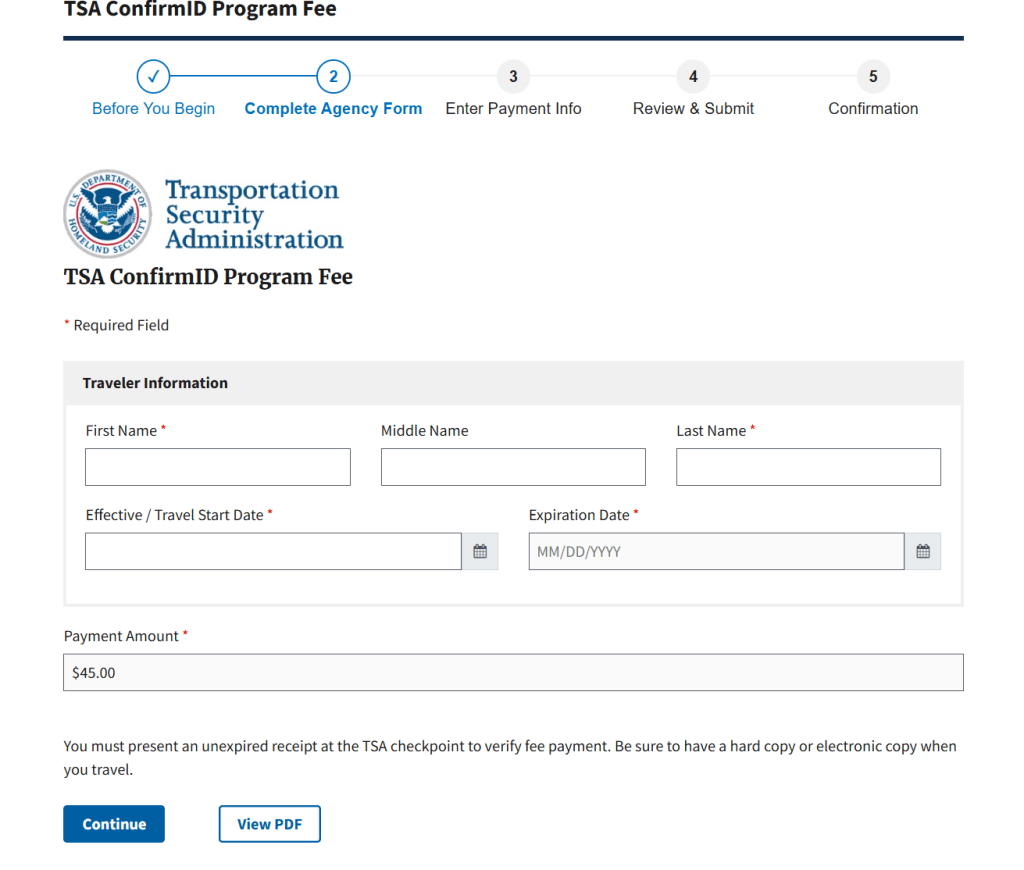
Starting on February 1st, TSA is rolling out TSA ConfirmID, giving travelers without a Real ID or alternative identification a new option to fly. The fee for this option is $45. TSA ConfirmID is valid for 10 days. The steps for this new program seem straightforward.

  1. Go to TSA ConfirmID and pay the fee before your flight
  2. Show payment confirmation to the TSA agent
    • Screenshot
    • Or email receipt
  3. Follow their instructions to complete ID verification
    • TSA utilizes Credential Authentication Technology (CAT) to verify identity at checkpoints by scanning physical/digital IDs and, optionally, facial recognition. You can read more about this technology here
    • This process could take anywhere between 10-15 minutes but could take up to 30 minutes.

According to TSA, those who do not have a Real ID or have paid the TSA ConfirmID fee will face additional delays, which could result in a missed flight. Make sure you pay the fee in advance or get yourself a Real ID/alternative identification. Here is a list of alternatives

Happy Travelz!

American Express Centurion Lounges: What to know and expect when visiting

American Express has 25 Centurion lounges worldwide, 15 of which are in the United States (soon to be 17). Today, we will explore the Centurion lounges in the U.S., what to know, what to expect when visiting, and how to get access. I have been to several of the locations in the U.S., and each has its unique ambiance. From the food offering to the design and amenities, each location aims to give its guests a local feel.

Where are the Centurion lounges in the U.S.?

  • Atlanta (ATL)
  • Charlotte (CLT)
  • Dallas (DFW)
  • Denver (DEN)
  • Houston (IAH)
  • Las Vegas (LAS)
  • Los Angeles (LAX)
  • Miami (MIA)
  • New York (JFK)
  • New York (LGA)
  • Philadelphia (PHL)
  • Phoenix (PHX)
  • San Francisco (SFO)
  • Seattle (SEA)
  • Washington D.C. (DCA)
  • Newark (EWR) – opening in 2026
  • Salt Lake City (SLC) – opening in 2025

What to know and expect when visiting?

American Express lounges are an excellent place to relax during a layover or if you get to the airport early. Depending on the location they offer a variety of amenities such as:

  • Spa
  • Shower suites
  • Conference spaces
  • Semiprivate workspaces
  • Personal workspaces
  • Game rooms
  • Large flat screen TVs
  • Outdoor terraces
  • Spirits and wine bar
  • Coffee bar
  • Tranquility areas
  • Piano lounge

American Express partners with James Beard Award-winning chefs to help curate locally inspired menus. They also offer a wide range of craft brews and spirits. Food options at these lounges are certainly steps above most airport lounges. Come hungry; you won’t be disappointed. The workspaces are a very nice amenity as well. If you have a long layover and need to get some work done, they come in handy. Lastly, one other amenity I’m a massive fan of is the shower suites. It was convenient when I took a red-eye for a meeting in New Orleans (MSY). I had a layover in IAH I took a shower and had breakfast before heading to MSY.

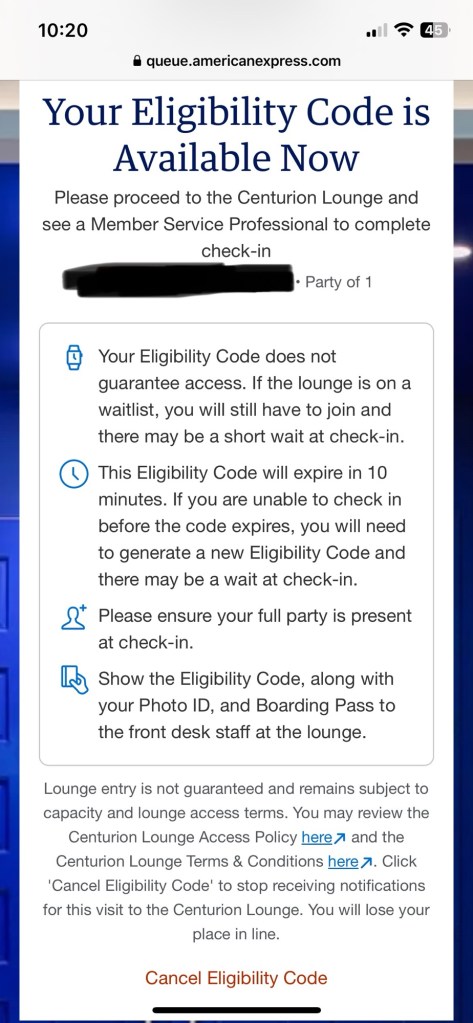
Given the popularity of these lounges, expect a wait. Many long-time Centurion guests have shared their complaints about the excessive wait times. During peak hours, lounges are usually very full. When accessing a lounge, you must get an eligibility code before you go. This gets you on the waitlist (if there is one) when you are going.

How to get lounge access?

To access Centurion lounges, you will need an eligible American Express card. Not all American Express cards are eligible to get access. The following cards are lounge eligible:

  • Platinum Card
  • Business Platinum Card
  • Centurion Card

If you have one of these cards, you have access. Guests’ access, however, is no longer complimentary. This policy changed on February 1, 2023. Previously, eligible cards could bring two complimentary guests. AMEX changed this policy to prevent overcapacity. There is now a fee of $50 per adult and $30 per child (ages 2-17). If cardholders want to keep the complimentary guest access, they will need to spend $75,000 or more on their card in a calendar year.

Leave a comment and let us know your Centurion lounge experience.

Happy Travelz!

Are you Real ID ready? Everything you need to know ahead of the May 7 deadline

What is Real ID?

It has actually been around for the last twenty years. However, it was not enforced until May 7th. For some history, in 2004, Congress passed a law requiring a national digital identification system to improve driver’s licenses and personal identification security. This came from the aftermath of the September 11th terrorist attacks. Beginning May 7, 2025, a Real ID will be required to board domestic flights and to enter federal facilities.

How to obtain a Real ID?

Each state has its own process for issuing Real IDs; the specific documents required will vary. In California, for example, you must provide one Proof of Identity and two Proof of Residence.

Below is a list of those documents:

Proof of Identity

  • Valid U.S. passport or passport card (Preferred)
  • Original or Certified copy of U.S birth certificate (issued by a city, county, or state vital statistics office). “Abbreviated” or “Abstract” certificates are NOT accepted.
  • Valid Permanent Resident Card
  • Foreign passport with valid U.S. Visa and approved I-94 form
  • Certificate of Naturalization or Certificate of U.S. Citizenship
  • Certified copy of birth certificate from a U.S. Territory
  • Valid Employment Authorization Document (EAD) Card (I-766) or valid/expired EAD Card with Notice of Action (I-797 C)
  • Valid Permanent Resident Card with Notice of Action (I-797 C) or Approval Notice (I-797)
  • U.S. Certificate of Birth Abroad or Consular Report of Birth Abroad of U.S. Citizen
  • Valid foreign passport stamped “Processed for I-551”
  • Documents reflecting TPS benefit eligibility

Proof of Residence

  • Home utility bill or cellular phone bill (Preferred)
  • Records from any state or national bank, state or federal savings association, trust company, industrial loan company, state or federal credit union, or any institution or entity that has issued a credit card
  • Insurance documents, including medical, dental, vision, life, home, rental or vehicle
  • Medical documents
  • A document issued by a U.S. government agency, meaning the entity, office, or authority governing over a country, state, county, city, municipality, district, agency, department, or any other political subdivision of a country or state
  • Mortgage bill
  • Employment documents
  • Tax return (either Internal Revenue Service (IRS) or California Franchise Tax Board (FTB) Faith-based document that includes the name and address of organization)
  • Rental or lease agreement with the signature of the owner/landlord and the tenant/resident
  • School documents issued by a public or private primary, secondary, or post-secondary institution, college, or university that includes the applicant’s date of birth. If using a foreign school document, it must be sealed by the school and include a photograph of the applicant at the age the record was issued.
  • Change of Address Confirmation by the U.S. Postal Service
  • Property tax bill or statement
  • Letter attesting that the applicant resides in California from a homeless shelter, shelter for abused women, non-profit entity, faith-based organization, employer or government agency within the United States
  • Deed or title to residential real property
  • Voter registration confirmation letter or postcard issued by the California Secretary of State or a local California county elections officer
  • Proof of payment of resident tuition at a public institution of higher education in California
  • An original copy of an approved Claim for Homeowners’ Property Tax Exemption (BOE-266) form filed with a local California County Assessor
  • Court documents that list the applicant as a resident of California
  • California Certificate of Vehicle or Vessel Titles or registration
  • A DMV No Fee Identification Card Eligibility Verification (DL 933) form, completed and signed

Can you still fly without a Real ID?

Yes, you can, but you will need to provide additional identification. Below is a list of accepted identification that you will need to present at TSA checkpoints:

  • State-issued Enhanced Driver’s License
  • U.S. passport
  • U.S. passport card
  • DHS trusted traveler cards (Global Entry, NEXUS, SENTRI, FAST)
  • U.S. Department of Defense ID, including IDs issued to dependents
  • Permanent resident card
  • Border crossing card
  • An acceptable photo ID issued by a federally recognized Tribal Nation/Indian Tribe, including Enhanced Tribal Cards (ETCs).
  • HSPD-12 PIV card
  • Foreign government-issued passport
  • Canadian provincial driver’s license or Indian and Northern Affairs Canada card
  • Transportation worker identification credential
  • U.S. Citizenship and Immigration Services Employment Authorization Card (I-766)
  • U.S. Merchant Mariner Credential
  • Veteran Health Identification Card (VHIC)

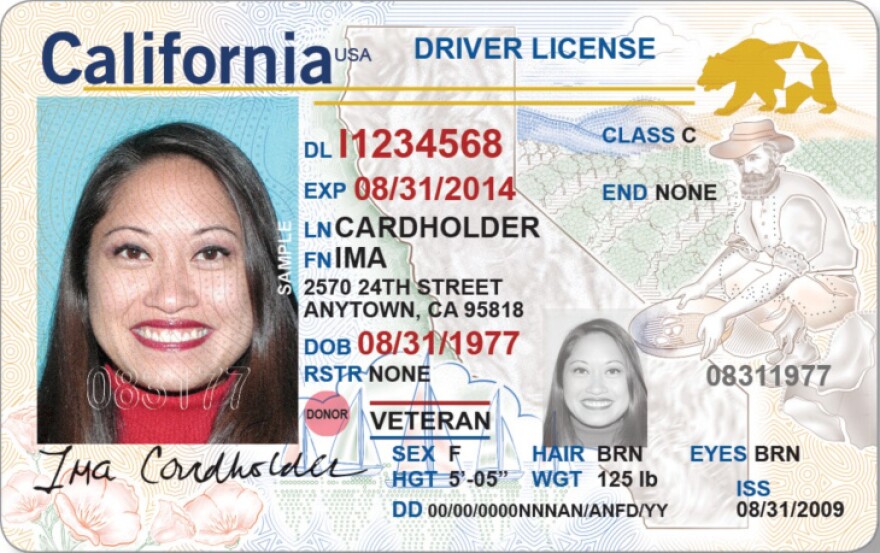
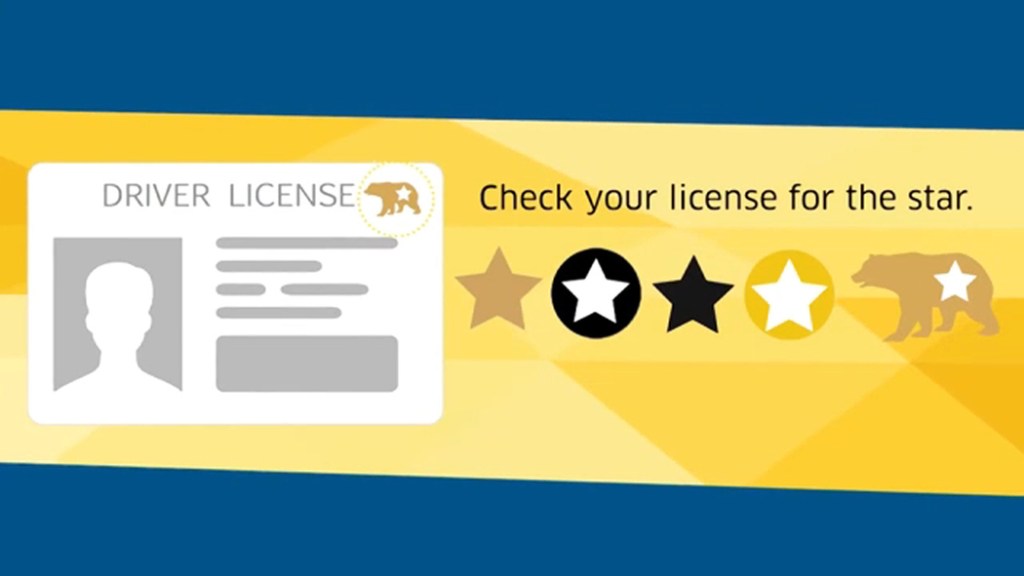
How do you know if you have a Real ID?

Look for the star on your driver’s license or ID. For example, in California it will have grizzly bear with a star. Here are some examples:

Do minors need a Real ID?

A minor (under 18) can obtain a Real ID in California. However, it is not required when traveling domestically in the United States.

Do I still need a Real ID, if I have CLEAR?

Yes, you do. While CLEAR Plus members can upload their passports in the CLEAR app. A Real ID is still required to present to TSA at the checkpoint. Here is their FAQ regarding their policy with Real ID.

Conclusion

As the deadline looms, DMVs across California and other states have seen an increase in booking appointments. If you cannot obtain one ahead of the deadline, just be prepared to show additional documentation.

Happy Travelz!

Window, Middle, or Aisle, what does your seat say about you?

Seats matter when we travel, don’t they? For me, it’s always the window seat! I just love the semi-privacy and the chance to rest my head against the window for a nap. And no, I won’t swap seats with you, haha! But today, I’m curious about something. What does your seat choice say about you? Let’s explore seat personalities.

You have the window, middle, or aisle seat. We have our preferences. The middle seat is sort of a toss-up. Unless you are traveling with someone else, I don’t think many voluntarily select the middle seat. But I could be wrong. Some may prefer to be sandwiched between two complete strangers. I am not judging; if you love it like I love my window seat, more power to you. Let’s dig in:

Window Seat

The window seat provides a semi-private feel, making you feel like you’re in your own bubble. You get great views and a place to lean against to get some sleep. Because of the semi-private feel, you can get work done on your laptop, journal, read a book, or simply look out the window and space out without interruptions. However, the only caveat is that you do not have the freedom to freely get up to use the bathroom or to stretch your legs. You become the nuisance of the row by asking the middle and aisle passengers to get up every time you want to get up from your seat.

Dr Becky Spelman, chief psychologist at Harley Street’s Private Therapy Clinic, told The Telegraph that those who prefer the window tend to be more in control. She said, “Passengers who favour the window seat like to be in control, tend to take an ‘every man for themselves’ attitude towards life, and are often more easily irritable. They also like to ‘nest’ and prefer to exist in their own bubble.”

Middle Seat

The middle seat is a toss-up. I don’t think many will voluntarily pick it unless they are traveling with someone else. The middle seat doesn’t offer much, except that you get both armrests (more on this in a later article). This person is likely very easygoing, talkative, and an extrovert, making them a great companion for a flight. Unlike the window seat, they don’t care too much about control. They possess humility and modesty.

Aisle Seat

And lastly, the aisle seat. This seat allows you to move around the cabin, access the overhead bin, and use the restroom whenever you wish. However, it does come with some inconveniences. Your seat is the only pathway for the window and middle seats, meaning you’ll need to stand up each time they need to use the bathroom or stretch their legs. When too many people walk the aisle, your seat is the only place they can step into to make way for others. You’ll also experience the occasional bump from passersby and service carts. And, of course, there’s the less-than-ideal view of people rummaging through the overhead bin at eye level.

But even with all those inconveniences, aisle seat passengers are said to be more amenable and don’t mind being inconvenienced. They are likely introverts, restless flyers, and less adept at sleeping on planes.

Which is your preferred seat, and do you agree with the traits above? Let us know in the comment section.

Happy Travelz!

What it’s like to be an Airline Gate Agent

Ever wondered what it’s like to be an airline gate agent? This customer service role is not just about calling out boarding groups, scanning boarding passes, and closing flights. It’s a crucial job involving various tasks and challenges, making it both demanding and rewarding.

Let’s step into their world:

  • As your Gate Agent, I strive to provide you with the best customer service possible.
  • As your Gate Agent, I strive to ensure you have a safe and on-time departure.
  • As your Gate Agent, I will keep you informed about your flight.
  • As your Gate Agent, I need to ensure your flight has a complete flight crew.
  • As your Gate Agent, I will call out several times for volunteers to gate check bags to ensure boarding isn’t held up due to lack of overhead bin space.
  • As your Gate Agent, I need to ensure the boarding process is as smooth as possible.
  • As your Gate Agent, I can ask you to step aside for being a gate lice (someone who attempts to board with the boarding group they are not assigned too).
  • As your Gate Agent, I can deny you from boarding the aircraft.
  • As your Gate Agent, I can have you escorted off the airplane.
  • As your Gate Agent, I can have you escorted off the airport.
  • As your Gate Agent, I can upgrade your seat.
  • As your Gate Agent, I can change your seat.
  • As your Gate Agent, I can help rebook you if your flight plans change due to delays or cancellations.
  • As your Gate Agent, I will ensure any unaccompanied minors traveling are safely on board and transferred to the flight crew.
  • As your Gate Agent, I must ensure you adhere to our carry-on luggage policy.
  • As your Gate Agent, I cannot control the weather.
  • As your Gate Agent, I cannot fix the airplane, that is the job of the maintenance crew.
  • As your Gate Agent, I cannot control runway congestion.
  • As your Gate Agent, I cannot push out the aircraft from the gate so your aircraft can park.
  • As your Gate Agent, I cannot control lost baggage, that is the job of the ramp crew to ensure your bag is loaded on the aircraft.
  • As your Gate Agent, I cannot pack your bag for you.
  • As your Gate Agent, I cannot call the pilot and ask them to return to the gate because you missed your flight.
  • As your Gate Agent, I cannot control the congestion at the checkpoint.
  • As your Gate Agent, I cannot control traffic on the way to the airport.
  • As your Gate Agent, I cannot give you a courtesy wake up call to ensure you arrive to the airport on time.
  • As your Gate Agent, regardless of how unreasonable or entitled you come at me. My goal is still to provide you with the best service possible.

We all aspire for a seamless and stress-free travel experience. However, there are times when our journey doesn’t go as planned. A cancelled or delayed flight, long checkpoint lines, lost baggage, or unfavorable seating assignments. In these moments, it’s the gate agent who bears the brunt of our travel woes. Let’s take a moment to acknowledge their efforts. They, like us, are not perfect, but they are doing their best to ensure our safe and timely arrival at our destination.

If you’re a gate agent or ever worked it. Share your thoughts.

Happy Travelz!

Part 1 – Stop With The Hacks! 5 Social Media Hacks That Are a Complete Waste of Your Time!

As a travel enthusiast, I’m always on the lookout for ways to enhance my travel experience. I’ve learned that saving money, getting the best service, and reaching my destinations swiftly and efficiently are key. In this quest, I’ve encountered numerous social media hacks. Some have proven to be effective, while others have been a complete waste of time. This has inspired me to start a series of ‘Stop With The Hacks!’ posts in the near future. But first, let’s delve into these five:

#1 – Fake a wheelchair request

What’s The Hack:

Most airports, if not all, have dedicated wheelchair lanes. This allows passengers using this service to expedite their passage through the TSA checkpoint. Due to this expedited process, some have suggested falsifying a wheelchair request to obtain a wheelchair. Some have suggested wrapping your leg, wearing a boot, or using a neck brace, among other options. Basically, look as beat up as possible so you can request a wheelchair at the ticket counter.

Why This Is A Waste Of Time:

You’re just wasting your time coming to the airport with all the extra theatrics and cosplay. Yes, this could be your opportunity to test out your acting skills. See how much you’ve learned in theatre class. But this is a complete waste of time and energy! Wheelchair service is a complimentary service. According to the Air Carrier Access Act, airlines or service providers cannot deny this service to anyone who requests it. So if you ask for one, you will get one. There is no need for all the extras. However, please don’t go this route if you genuinely don’t need it. It’s unethical, and some passengers truly need it. So don’t be selfish just because you want to expedite through the checkpoint. Arrive at the airport on time or opt for TSA Pre/CLEAR; it’s that simple.

#2 – Place extra clothing or soft items inside a pillowcase

What’s The Hack:

To avoid extra fees for carry-on luggage or gate-checking your extra bag. Place extra clothing or soft items inside a pillowcase. It would not technically count against the airlines’ one carry-on (luggage or roll-on) and one personal item rule (such as a backpack or purse).

Why This Is A Waste Of Time:

This doesn’t work because anyone looking at an actual pillow stuffed with clothing knows it’s not a pillow. Airlines are on to this “hack” and will likely stop passengers with pillows and question them. If the airline you are flying with charges for carry-on luggage, pay the fee in advance. This will help you avoid the inflated gate charge and the risk of being booted off the flight. Check out this video captured by @NatashaOrganic and posted to her TikTok account of an incident at Orlando Airport.

#3 – Dress nice for an upgrade

What’s The Hack:

Want to experience first or business class? Dress the part and request a seat upgrade.

Why This Is A Waste Of Time:

This will be short and straight to the point. Your basic economy ticket does not allow for upgrades, early boarding, or seat selection. The upgrade waitlist is extensive, including passengers with airline status. So feel free to wear your best suit or dress. You will be the best-dressed passenger in basic economy.

#4 – Pretend to be asleep to get the window seat

What’s The Hack:

You arrive at your seat, and voilà, the window seat is unoccupied. So you sit there and pretend to sleep. This is so the person actually assigned that seat feels terrible enough for you that they allow you to rest and keep the seat.

Why This Is A Waste Of Time:

Most passengers, like myself, will not easily give up their cherished window seat. We chose the window seat for its personal benefits: the comfort of leaning against the window for a peaceful sleep, the sense of privacy, the reduced disturbance compared to the aisle seat, and the awe-inspiring panoramic views. So, feel free to pretend to sleep. If a gentle tap doesn’t rouse you, I won’t hesitate to call the flight attendant. Enjoy the window seat while it’s yours.

#5 – Buy tickets individually for a group

What’s The Hack:

Purchasing tickets individually for a group for cheaper fares.

Why This Is A Waste Of Time:

Booking individually can lead to issues with seating arrangements, connecting flights, and availability, especially when tickets are in short supply. Some airlines offer reduced rates for group bookings. By booking as a group, you can ensure that everyone travels together. While not everyone may be seated together, a majority of the group will be.

Conclusion

Don’t believe everything you hear or see on social media. Do your research before you try any of these. Outweigh the possible outcomes. Because you could end up paying more or simply be denied to fly.

Have you tried any of these ‘hacks”?

Share your thoughts.

Happy Travelz!

First time renting an EV? Here is your guide!

Renting an EV for the first time?

If you’re like me, I was nervous! I don’t own an EV, nor have I ever driven one. So, I have always been hesitant to rent one. Until the day came that all Avis had left was an EV. I had a ton of questions. I’m sure the customer service rep thought I have been living under a rock lol. The first EV I rented was a Chevy Bolt. I was so determined to make it work that I even Googled how to drive and charge it before I drove off the lot.

The driving mechanisms are the same as those of any car. It was the charging that had me nervous. Overall, my experience was good. Except for the fact it took 45 minutes to charge to 80% (more on this later). Since then I have rented a few different EVs. Each has its own pros and cons. But what’s truly exciting is the variety of rental car companies, each with its unique fleet, charges prices, and availability.

Im going to dive into my rental experiences and share some tips on how to plan your EV rental.

But first let’s start with the car rental companies.

Renting from Avis, Budget, and Hertz

So far, I have only rented an EV from these three companies. Price-wise, the daily rental price was pretty much the same as that of gas-powered vehicles. As many of you know, car rental prices fluctuate daily. Of course, the price difference is due to the category of the EV, which is similar to that of a gas vehicle. A Tesla is in a much higher vehicle category than, say, a Chevy Bolt. What also differs is their Charge Price Option (CPO), which is essentially a pre-paid charge similar to pre-paying for fuel in gas vehicles. Liability coverage is the same. They offer three protection packages. I personally opt out of these. My credit card covers my rental. So save the extra cost.

Let me share some insight from each rental company.

Hertz:

  • They tend to offer EV manager specials. These specials typically could be any EV of any category. Which can range from a Chevy, Kia, or Buicks.
  • Charge Price Option (CPO) is $28.
  • Return at the same battery level for no extra charges. If returned less than charge you got it in. Prices can range between $60-$70 plus. They will up charge per kWh.
  • They don’t offer Tesla rentals. At least the one I have rented, which is located in Burlingame, CA.
  • Check out their EV FAQ:

Avis:

  • On occasion they have offered specials on EVs which made the daily rental much cheaper than gas powered.
  • Charge Price Option (CPO) is $25.
  • Return battery level at least 70% or the same for no extra charges. If returned between 70% and 10% a fee of $35 is applied. If returned, less than 10% another $35 fee will be applied. Totally to $70 in charging fees.
  • They offer a wide range of EVs, such as Tesla, Mustang, Kia, and Chevy.
  • Check out their EV FAQ:

Budget:

  • I haven’t come across any specials for EVs.
  • Charge Price Option (CPO) is unknown. I wasn’t offer the option when I rented.
  • Return battery level at least 70% or the same for no extra charges. If returned between 70% and 10% a fee of $35 is applied. If returned, less than 10% another $35 fee will be applied. Totally to $70 in charging fees.
  • They offer Tesla’s and Chevy.
  • Check out their EV FAQ

My experience with different EV models. I’ll start with my first to least favorite.

Kia EV6:

  • Very spacious interior. It’s a midsize SUV.
  • Nice sporty body style.
  • Good battery life.
  • The charge took about 20-25 minutes, from 30% to 80%.
  • Here is YouTube guide on how to charge it

Kia Niro:

Tesla Model 3:

  • Fun gadgets. The dash board is cool.
  • Battery was mediocre
  • It charged the fastest. It took about 20-30 minutes to go from 20% to 80%.
  • The charging station guide has a nice touch. When you navigate to a supercharger station it tells you how many chargers are available to use at the station.
  • Here are instructions on how to charge it from the owners guide

Ford Mustang Mach E:

  • Roomy interior
  • It has a nice kick when you accelerate.
  • Terrible battery life.
  • The charging took about 30-35 minutes from 40% to 80%
  • Here is a YouTube guide on how to charge it

Chevy Bolt:

Some Tips

  1. If you’re going on a long drive, be aware of the nearest charging stations along your route.
  2. When charging your electric vehicle (EV), consider the amount of time it takes to fully charge. Depending on the battery level at the time you charge it. Some EV models charge faster than others. So make you sure you plan that time.
  3. Understand your car rental company’s battery level return policy to avoid excess charges.
  4. Learn how to charge your EV before driving off.
  5. Consider purchasing your rental company’s Charge Price Option (CPO) if you plan to return it near empty.

Conclusion

My overall experience has been good. The daily rental rate is no different from that of gas vehicles. However, I have been able to save on the total rental cost. Electric charging doesn’t cost as much as fuel. I have seen a cost savings of approximately $40 to $80 with electric vehicles (EVs) versus gas-powered cars. I’m sure I can improve my battery life if I adjust my driving style. EVs recharge as you drive. I’m very heavy-footed, so I tend to keep my foot on the accelerator, which uses up more battery power. Over time, this should improve as I drive more electric vehicles. Anyhow, if you are still hesitant to rent one, I totally understand how you feel. However, I say give it a shot. It isn’t as bad as you think.

Comment and share your EV rental experience. Till the next one!

Happy Travelz!

Marfa’s Art Scene: A Creative Journey

Ever heard of Marfa, the vibrant artsy city in far West Texas? Before we dive into its vibrant art scene. Let’s start from the beginning.

History

Marfa, a town with a unique origin, was established in 1883 as a rail road water stop and freighter headquarters for the Galveston Harrisburg and San Antonio Railway. The name Marfa, intriguingly, is Russian for Martha. Legend has it that the wife of the railroad executive was reading a novel with a character named Marfa, which inspired the town’s name. In the 1920s, its population began to grow, reaching 3,900 residents by 1930. During this time, Marfa had a significant military presence from World War II, with the Marfa Army Air Field serving as a training facility for thousands of pilots. Despite an economic downfall after the war ended, Marfa has shown resilience and continues to thrive.

The Rise of Art

In the 1970s, artist Donald Judd established the Chinati Foundation, which transformed the old Fort D.A. Russell into a modern art museum. Marfa soon became a haven for contemporary art experimentation. Today, Marfa is home to some of the world’s most extraordinary art pieces and architectural designs.

Let’s explore ……

Prada Marfa

A land sculpture that houses luxury goods from the brand’s fall 2005 collection of bags and shoes. The sculpture was created by artists Elgreen & Dragset.

El Cosmico

A unique bohemian hotel and off-grid campground, it was founded in 2009 by Liz Lambert, a renowned hospitality and design visionary.

Giant (1956)

Massive mural celebrating the western film Giant.

What’s next?

If you want to come here, the nearest major airport is El Paso International Airport (ELP). It is a three-hour drive, and you will enjoy scenic plains along the way.

Comment and share your thoughts and experiences about this majestic city.

Happy Travelz!

FoundersCard Review

I recently signed up for a free annual FoundersCard membership through my Clear membership. I was curious about its benefits or discounts compared to my AMEX platinum, so I decided to give it a try.

What is FoundersCard?

It is a membership program that offers discounts and benefits for travel, shopping, experiences, and business services. While anyone can join, it markets itself as a membership program for entrepreneurs, business executives, and other professionals. In short, it’s a high-end coupon book. This is not a credit card.

Cost:

FoundersCard has a two tier membership:

  • Standard for $595 a year
  • Elite for $995 a year

What benefits does FoundersCard offer?

They offer various benefits related to travel, lifestyle, business, and experiences. Most benefits provide a discount code, and some fast-track you to elite status. I will highlight a few popular benefits from various companies:

  • Travel benefits on the following airlines: Virgin Atlantic, Singapore Airlines, Alaska Airlines, Qantas, United Airlines, Surf Air, Aero, Qatar Airways, FXAIR, La Compagnie, JSX, and Air New Zealand.
  • Loyalty Program Status Upgrades for: Marriott Bonvoy, Hertz, Hilton Honors, Avis, SIXT Rent a Car, Virgin Atlantic, IHG One, Omni, Sonesta, and Wynn Rewards.
  • Premium Retail for: Mecedes Benz, BWI, Audi, and Jeep
  • Experience Access to: Concerts, Sports, NHL, Theatre, Links2Golf and more

Here’s a glimpse of their benefits when logged in:

Signup Process:

When I signed up, it asked for my profession and company. After entering my details and submitting my application, I got a confirmation that my application was being reviewed. After about a day or so, my application was approved. To point out, I’m not an executive at my company, which is why I mentioned that perhaps anyone can join.

How do they stack up against premium travel cards?

I can’t speak to other travel cards except AMEX Platinum. In comparison, they don’t offer the same benefits. Here are some examples that FoundersCard does not have:

  • Airport lounge access
  • Car rental and hotel status
  • You don’t earn points on purchases
  • No travel credits
  • Entertainment credits
  • Uber credits

While I can use points for travel, FoundersCard does have discount codes for a few airlines, which I think is pretty cool. If you’re a frequent flyer of one of their partnering airlines, the codes could be useful.

Conclusion:

From the outset, FounderCard benefits overlap with some of my AMEX benefits, making it hard for me to justify the annual cost on top of my AMEX’s. However, this could be good for you if you don’t have a premium travel card. If you add up all the discounts you are offered, it could be worth the annual fee. I like to earn points on my purchases, which I can use later. While FoundersCard is not a credit card, you can earn FCPoints, which you can use towards gift cards. If you’re interested, check them out HERE

Happy and Safe Travelz!