By now, many of you are aware of what a Real ID is. Enforcement began on May 7, 2025. As of early 2025, TSA reported that roughly 80% of travelers who passed through checkpoints were Real ID-compliant. Knowing this highlights the importance of being prepared, so you can avoid extra screening and travel smoothly. If you are not compliant, you will be required to undergo additional screening, such as removing shoes or swabbing luggage, and show a paper card to TSA agents.
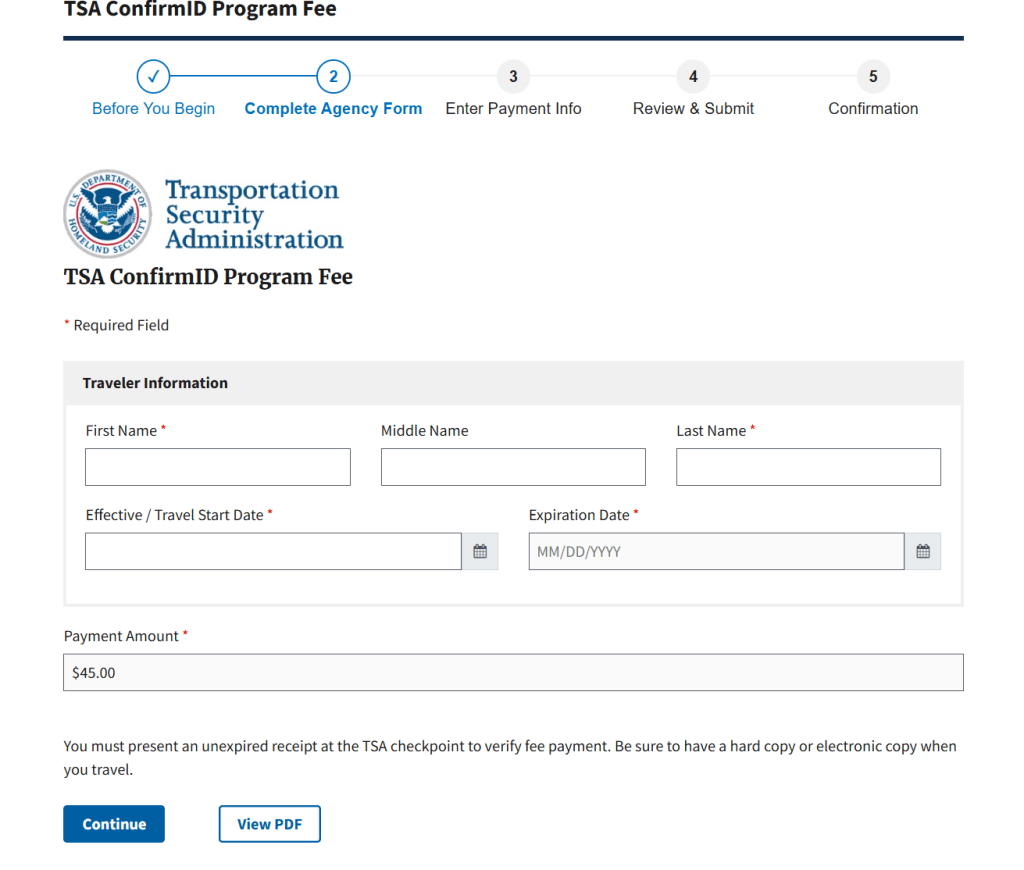
Starting on February 1st, TSA is rolling out TSA ConfirmID, giving travelers without a Real ID or alternative identification a new option to fly. The fee for this option is $45. TSA ConfirmID is valid for 10 days. The steps for this new program seem straightforward.
Go to TSA ConfirmID and pay the fee before your flight
Show payment confirmation to the TSA agent
Screenshot
Or email receipt
Follow their instructions to complete ID verification
TSA utilizes Credential Authentication Technology (CAT) to verify identity at checkpoints by scanning physical/digital IDs and, optionally, facial recognition. You can read more about this technology here
This process could take anywhere between 10-15 minutes but could take up to 30 minutes.
According to TSA, those who do not have a Real ID or have paid the TSA ConfirmID fee will face additional delays, which could result in a missed flight. Make sure you pay the fee in advance or get yourself a Real ID/alternative identification. Here is a list of alternatives
It has actually been around for the last twenty years. However, it was not enforced until May 7th. For some history, in 2004, Congress passed a law requiring a national digital identification system to improve driver’s licenses and personal identification security. This came from the aftermath of the September 11th terrorist attacks. Beginning May 7, 2025, a Real ID will be required to board domestic flights and to enter federal facilities.
Original or Certified copy of U.S birth certificate (issued by a city, county, or state vital statistics office). “Abbreviated” or “Abstract” certificates are NOT accepted.
Valid Permanent Resident Card
Foreign passport with valid U.S. Visa and approved I-94 form
Certificate of Naturalization or Certificate of U.S. Citizenship
Certified copy of birth certificate from a U.S. Territory
Valid Employment Authorization Document (EAD) Card (I-766) or valid/expired EAD Card with Notice of Action (I-797 C)
Valid Permanent Resident Card with Notice of Action (I-797 C) or Approval Notice (I-797)
U.S. Certificate of Birth Abroad or Consular Report of Birth Abroad of U.S. Citizen
Valid foreign passport stamped “Processed for I-551”
Documents reflecting TPS benefit eligibility
Proof of Residence
Home utility bill or cellular phone bill (Preferred)
Records from any state or national bank, state or federal savings association, trust company, industrial loan company, state or federal credit union, or any institution or entity that has issued a credit card
Insurance documents, including medical, dental, vision, life, home, rental or vehicle
Medical documents
A document issued by a U.S. government agency, meaning the entity, office, or authority governing over a country, state, county, city, municipality, district, agency, department, or any other political subdivision of a country or state
Mortgage bill
Employment documents
Tax return (either Internal Revenue Service (IRS) or California Franchise Tax Board (FTB) Faith-based document that includes the name and address of organization)
Rental or lease agreement with the signature of the owner/landlord and the tenant/resident
School documents issued by a public or private primary, secondary, or post-secondary institution, college, or university that includes the applicant’s date of birth. If using a foreign school document, it must be sealed by the school and include a photograph of the applicant at the age the record was issued.
Change of Address Confirmation by the U.S. Postal Service
Property tax bill or statement
Letter attesting that the applicant resides in California from a homeless shelter, shelter for abused women, non-profit entity, faith-based organization, employer or government agency within the United States
Deed or title to residential real property
Voter registration confirmation letter or postcard issued by the California Secretary of State or a local California county elections officer
Proof of payment of resident tuition at a public institution of higher education in California
An original copy of an approved Claim for Homeowners’ Property Tax Exemption (BOE-266) form filed with a local California County Assessor
Court documents that list the applicant as a resident of California
California Certificate of Vehicle or Vessel Titles or registration
A DMV No Fee Identification Card Eligibility Verification (DL 933) form, completed and signed
U.S. Department of Defense ID, including IDs issued to dependents
Permanent resident card
Border crossing card
An acceptable photo ID issued by a federally recognized Tribal Nation/Indian Tribe, including Enhanced Tribal Cards (ETCs).
HSPD-12 PIV card
Foreign government-issued passport
Canadian provincial driver’s license or Indian and Northern Affairs Canada card
Transportation worker identification credential
U.S. Citizenship and Immigration Services Employment Authorization Card (I-766)
U.S. Merchant Mariner Credential
Veteran Health Identification Card (VHIC)
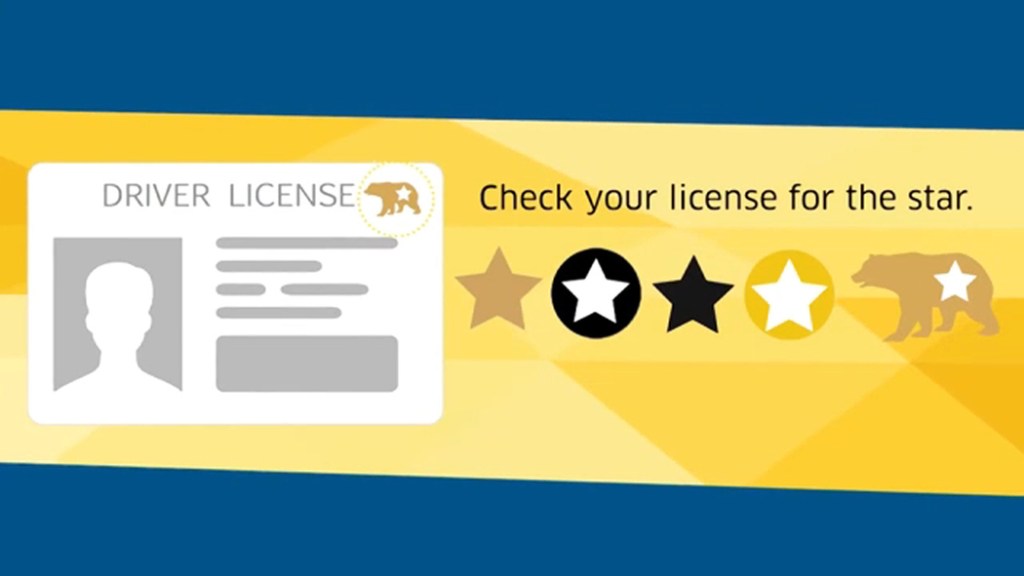
How do you know if you have a Real ID?
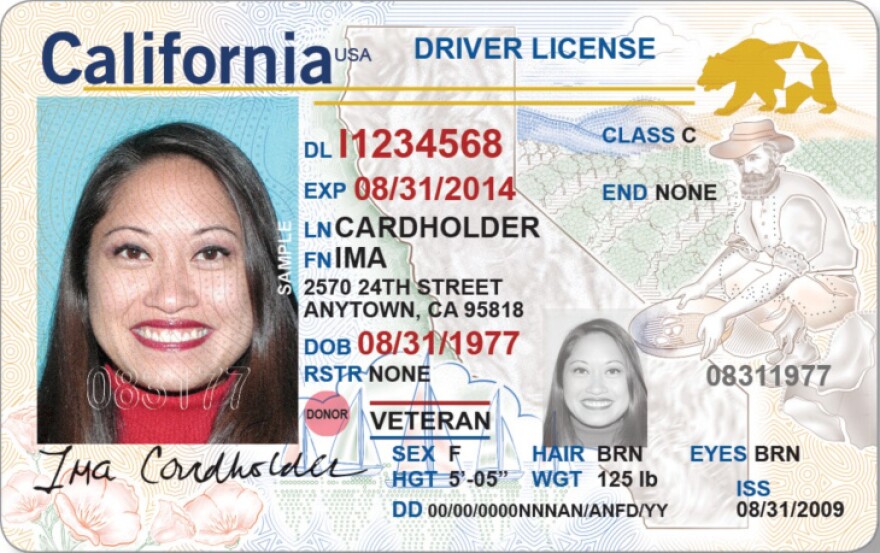
Look for the star on your driver’s license or ID. For example, in California it will have grizzly bear with a star. Here are some examples:
Do minors need a Real ID?
A minor (under 18) can obtain a Real ID in California. However, it is not required when traveling domestically in the United States.
Do I still need a Real ID, if I have CLEAR?
Yes, you do. While CLEAR Plus members can upload their passports in the CLEAR app. A Real ID is still required to present to TSA at the checkpoint. Here is their FAQ regarding their policy with Real ID.
Conclusion
As the deadline looms, DMVs across California and other states have seen an increase in booking appointments. If you cannot obtain one ahead of the deadline, just be prepared to show additional documentation.
If you have not flown yet on a public charter, it is truly an experience like no other. Unlike your traditional travel booking through the major airlines. You can avoid the long checkpoints, over crowded boarding gates, and terminal traffic by flying with a public charter.
That is where JSX comes in. Since 2016, JSX has built a reputation of providing a frictionless and crowd-free air travel experience. During my visit to one of the JSX locations. I noticed that the mood is joyful and less tense. Guests arrive, checkin, drop off their bags then hang out in the lounge until it’s time to board the aircraft.
Occasionally there are celebrities and athletes who fly JSX too. Now one would wonder why not just take a fully private plane. But perhaps some would rather forgo the expensive option and go semi-private. I could see why celebrities would take this option. It’s less of a crowd and they can avoid the hassle and attention they would get if it was at the terminal gates.
Why us versus Everybody?
While JSX has enjoyed success and continued growth. That success has come with challenges as well. Major airlines such as American Airlines and Southwest Airlines is lobby for the federal government to impose stricter regulations on JSX. Since JSX is not considered a commercial airline it operates under a different set of regulations. Which the major airlines are alleging JSX is taking advantage of regulatory loopholes.
What’s next from here?
The FAA and TSA has begun reviewing whether public charters should operate under the same regulations as commercial airlines. A ruling on the matter has not yet been determined and is ongoing.
In the meantime, JSX has its sight set on a new destination. This winter they return to Taos, New Mexico.


 travelfeelz